
Leak Detection – Detection of leaks in buried pipes
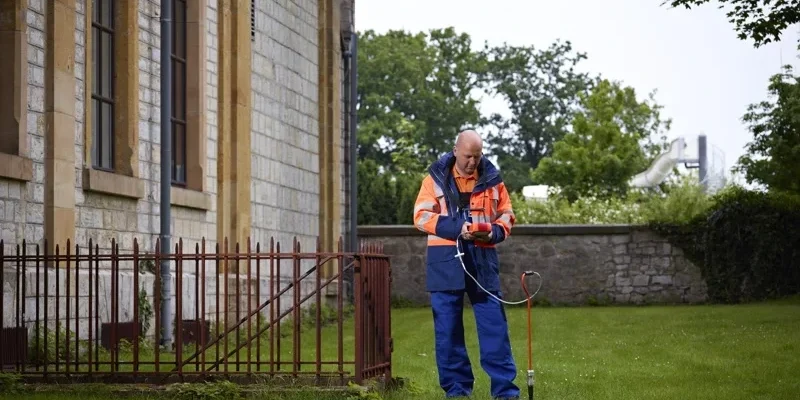
The technique of using tracer gas to detect leaks in buried pipes is a highly effective approach that is widely used in the utility industry. It involves introducing a specific gas, such as helium or hydrogen, into the pipe under pressure. If there is a leak, the tracer gas will escape to the surface of the ground.
Difficult visual detection
This method is particularly valuable in locations where pipes are buried under pavements, roads, or areas of dense vegetation, where visual detection may be impossible or extremely difficult. The sensitivity of gas detection equipment is such that even the smallest leaks can be identified quickly and accurately.
In addition, the tracer gas technique is non-destructive, meaning there is no need for extensive digging to find the source of the leak. This significantly reduces the costs and time associated with pipeline maintenance and repair operations.
Maintaining safety
By offering a fast, accurate, and non-invasive solution for detecting leaks in buried pipes, the tracer gas technique plays a key role in maintaining infrastructure safety and preserving natural resources. Its widespread use continues to ensure the integrity and efficiency of gas and water distribution networks around the world.
Helium or hydrogen
In addition to its effectiveness in detecting leaks in buried pipes, the tracer gas technique also offers further benefits. For example, the use of gases such as helium or hydrogen as tracers is not harmful to the environment, making it a sustainable option for detecting leaks in gas and water distribution systems. Furthermore, the speed with which leaks can be identified allows for an immediate response, minimising the risk of damage to property or the environment.
Translated with DeepL.com (free version)
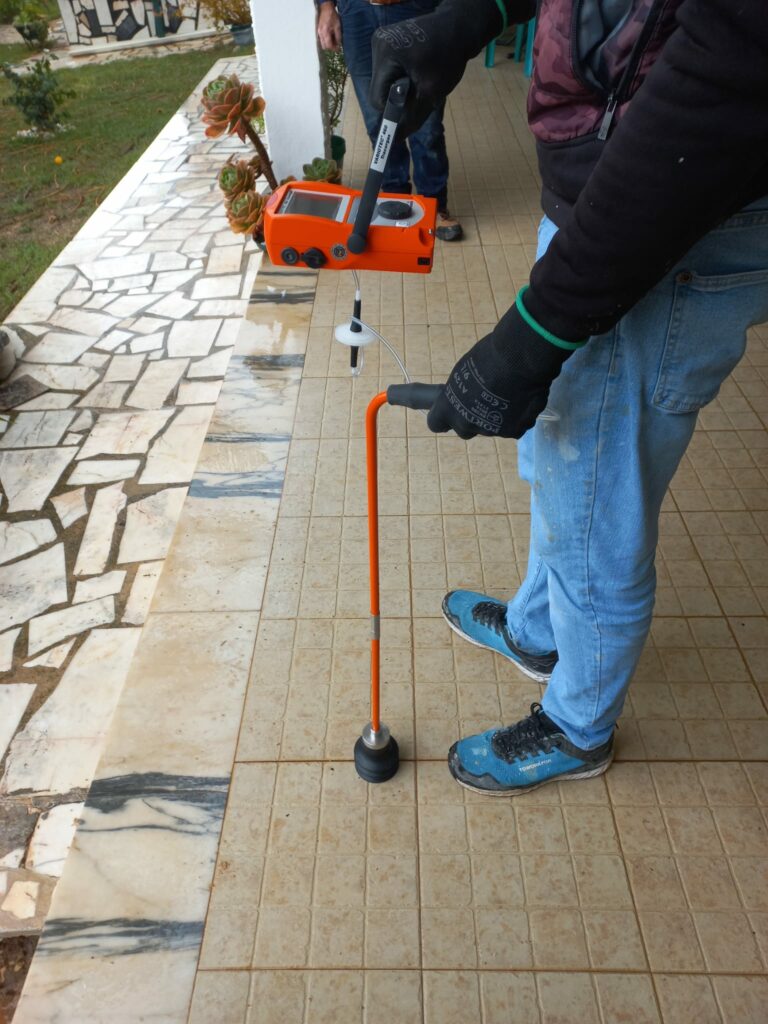
Another important aspect is the ability to map the extent of detected leaks. Tracer gas detection equipment often comes equipped with location features that allow technicians to accurately determine the exact location and extent of leaks, facilitating the planning and execution of corrective measures.
Urban areas or remote regions
In addition, the tracer gas technique can be applied in a wide range of conditions and environments, from densely populated urban areas to remote and hard-to-reach regions. This makes the technique versatile and suitable for a variety of situations, from maintaining gas distribution systems in large cities to monitoring water networks in rural areas.
In short, the tracer gas technique offers a unique combination of effectiveness, sustainability, and versatility in detecting leaks in buried pipes, playing a crucial role in maintaining public service infrastructure and protecting the environment.
Advanced technologies
The tracer gas technique can also be combined with advanced technologies, such as drones equipped with gas detection sensors, for aerial inspections of extensive underground pipe networks. This approach allows for faster and more comprehensive coverage, especially in areas that are difficult to access or have rough terrain.
In addition, this technique is often integrated with remote monitoring systems, which allow for continuous surveillance of pipeline networks. This is especially beneficial in locations where leaks may occur intermittently or in high-risk areas, ensuring an immediate response to any sign of leakage.
However, it is important to note that the effectiveness of the tracer gas technique depends on the proper selection of the tracer, environmental conditions, and the skill of the operators. Therefore, proper training and regular maintenance of equipment are essential to ensure accurate and reliable results in detecting leaks in buried pipelines.
VARIOTEC 460 Tracer Gas
At SaltOrnamental, we use the VARIOTEC 460 Tracer Gas which offers sensitivity and precision in detecting leaks in buried pipes. This advanced device is capable of identifying even the smallest tracer gas leaks, contributing to the efficient and safe maintenance of gas and water distribution infrastructure.
Learn more about our services here.